Choosing the right cabinet style is one of the biggest decisions you’ll make during a kitchen remodel. It shapes how your kitchen looks, how it feels to use every day, and how well it holds up over time. Two styles come up in nearly every design conversation: shaker cabinets vs. flat panel cabinetry.
Both options are popular for good reason. Each brings something different to the table, and neither is the wrong choice — it really depends on your home, your lifestyle, and the look you’re going for.
If you’re in the Bay Area and trying to figure out which direction to go, you’re not alone. Homeowners across San Jose, Sunnyvale, Santa Clara, and Los Gatos wrestle with this exact question every day. This guide breaks down the key differences between shaker and flat-panel cabinetry—covering aesthetics, versatility, cleaning, cost, and more—so you can walk into your remodel with confidence.
What Are Shaker Cabinets?
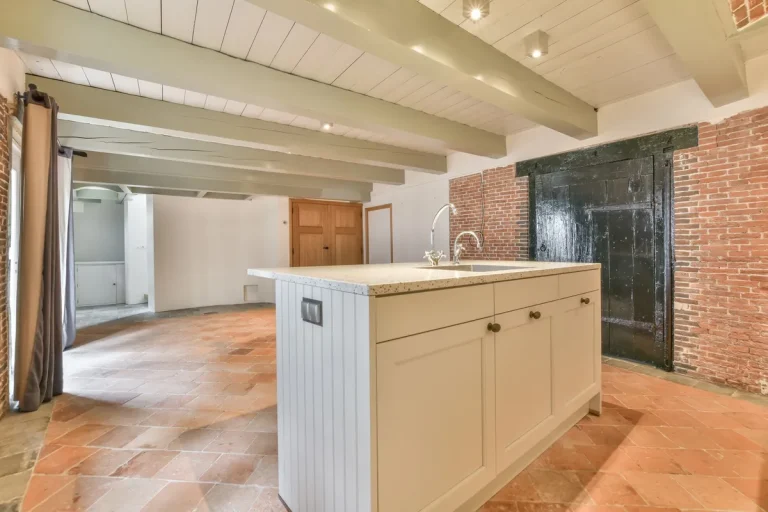
Shaker cabinets are defined by their five-piece door construction: a flat center panel surrounded by four rails and stiles forming a simple frame. That recessed center panel gives the door a clean, slightly dimensional look.
The style originated with the Shaker religious community in 18th-century America. Their design philosophy centered on simplicity, function, and honest craftsmanship. Those values translated into furniture and cabinetry that stood the test of time.
Today, Shaker cabinets are the most widely used cabinet style in American kitchens. They work in traditional, transitional, and even modern spaces. Their framed profile adds subtle visual interest without feeling heavy or dated.
The style has staying power because it doesn’t try too hard. It’s straightforward, well-proportioned, and adaptable — which is exactly why homeowners keep coming back to it.
What Are Flat Panel Cabinets?
Flat panel cabinets — also called slab cabinets — feature a single, completely smooth door with no frame, recess, or decorative detail. You see a clean, uninterrupted surface from edge to edge.
This style became popular alongside the rise of mid-century modern and contemporary design movements. The idea was to strip away everything unnecessary and let clean lines and quality materials speak for themselves.
Flat panel cabinets are commonly used in modern and minimalist kitchens. They work especially well in open-concept layouts where the kitchen connects visually to a living or dining area with a streamlined design.
The appeal is in the simplicity. Flat panel doors look polished and intentional. When paired with the right hardware, countertops, and finishes, it creates a kitchen that feels sleek and uncluttered.
Aesthetic Differences: Side-by-Side Comparison
This is often where homeowners start — with how each style looks. Here’s a straightforward breakdown:
| Feature | Shaker Cabinets | Flat Panel Cabinets |
|---|---|---|
| Door Profile | Recessed center panel with frame | Completely smooth, no frame |
| Visual Depth | Subtle dimension and shadow lines | Flat, uniform surface |
| Design Feel | Classic, warm, versatile | Modern, sleek, minimal |
| Hardware Style | Wide range (knobs, pulls, cup pulls) | Typically integrated or bar pulls |
| Popular Finishes | White, gray, navy, natural wood | High-gloss, matte, wood veneer |
Shaker cabinets have a slightly warmer visual presence. The framing detail catches light and creates gentle shadow lines, which adds character without overwhelming the space.
Flat panel cabinets offer a cleaner, more graphic look. The absence of detail is the design statement. They tend to feel more modern and can make a kitchen look larger when paired with light colors and minimal hardware.
Design Versatility: Which Style Fits More Kitchens?
Shaker Cabinets Across Different Styles
Shaker cabinets work in an unusually wide range of kitchen styles. In a farmhouse kitchen, they pair naturally with apron-front sinks and open shelving. In a transitional kitchen, they bridge the gap between classic and contemporary without effort.
They also work in more formal traditional spaces when paired with decorative crown molding and classic hardware. In a modern space, the right paint color and minimal hardware can make shaker cabinets look just as clean as flat-panel cabinets.
This versatility is one of the biggest reasons shaker remains the most popular cabinet style. It’s rarely the wrong choice, and it adapts well as design trends shift over time.
If you’re planning to sell your home in the next five to ten years, shaker cabinets are also a safe investment. They appeal to the broadest range of buyers.
Flat Panel Cabinets Across Different Styles
Flat panel cabinets are best suited to modern, contemporary, and minimalist kitchens. They’re a natural fit for open-plan spaces, homes with industrial or Scandinavian design influences, and kitchens that prioritize a clean, gallery-like atmosphere.
They can also work in transitional spaces, especially when softened with warm wood tones, natural stone countertops, or mixed metals. But they require more intentional design decisions to avoid feeling cold or sterile.
If your home already leans modern — clean architecture, large windows, minimal trim detail — flat panel cabinetry will feel like a natural extension of that design language.
In a more traditional home with detailed millwork and warm finishes, flat panel cabinets can feel out of place unless the rest of the design is updated to match.
Ease of Cleaning and Maintenance
People don’t think much about cleaning during the design phase—and then think about it constantly once they’re living with their cabinets.
Here’s how the two styles compare:
| Factor | Shaker Cabinets | Flat Panel Cabinets |
|---|---|---|
| Grease & Grime Buildup | Can collect in recessed groove | Wipes clean easily |
| Daily Cleaning | Requires attention to frame edges | Simple wipe-down |
| Fingerprints | Less visible on most finishes | More visible on high-gloss finishes |
| Scratch Visibility | Less noticeable overall | More visible on matte finishes |
| Long-Term Upkeep | Moderate | Low to moderate |
Flat panel cabinets are generally easier to wipe down. No recessed groove lets cooking grease or crumbs accumulate. A damp cloth covers the whole surface in one pass.
Shaker cabinets require a little more care in the frame’s interior corners. It’s not a major issue, but it’s worth knowing if low-maintenance cleaning is a priority for your household.
Cost Considerations: What to Expect
Cost differences between shaker vs. flat panel cabinets depend on several factors, including material, finish, and construction quality. Here’s a general breakdown:
- Shaker cabinets are typically mid-range in price because the five-piece door construction requires additional components.
- Flat panel cabinets in basic materials like MDF or thermofoil can be among the most affordable options on the market.
- High-end flat panel cabinets in solid wood, custom veneer, or European frameless construction can cost significantly more than shaker equivalents.
- Finish type matters — high-gloss lacquer on flat panel cabinets adds cost compared to a painted shaker door.
- Custom vs. semi-custom options are available in both styles, and that decision typically affects the overall budget more than the door style itself.
The bottom line is that neither style is inherently more expensive than the other. It comes down to the materials and level of customization you choose.
Brother and Brother Builders works with homeowners across all budget ranges, offering both semi-custom and fully custom cabinetry options in shaker and flat panel styles. During a free consultation, the team helps you find the best value for your investment.
Which Kitchen Layouts Work Best with Each Style?
Kitchen layout plays a bigger role in cabinet style selection than many homeowners realize.
- Galley kitchens — Flat panel cabinets keep the space from feeling visually busy. Shaker works here too, especially in lighter colors.
- L-shaped kitchens — Both styles work well. Shaker adds warmth in a larger L-shaped layout.
- U-shaped kitchens — Shaker’s subtle dimension adds interest across the wide wall run. Flat panel can feel very streamlined here.
- Open-concept kitchens — Flat panel tends to integrate more naturally with adjacent living spaces. Shaker works well when the broader home has a transitional or traditional feel.
- Island kitchens — Either style works. A contrasting island finish can create visual interest with either door style.
Think about how your kitchen connects to the rest of your home. The cabinet style that feels right in isolation should also make sense in context.
How Hardware Affects the Final Look
Hardware can completely change how a cabinet style reads in the space.
Shaker cabinets work with a wide range of hardware options. Traditional bin pulls and cup pulls reinforce a farmhouse or classic look. Simple bar pulls or knobs push shaker toward a more contemporary feel. Matte black hardware on white shaker cabinets has become one of the most popular combinations in Bay Area kitchen remodels.
Flat panel cabinets often use integrated pulls, push-to-open mechanisms, or long bar pulls. The goal is usually to maintain the clean line without interruption. Integrated hardware keeps the surface unbroken, which works well in ultra-modern spaces.
Hardware is one of the last decisions in the design process, but one of the most visible. It’s worth getting hands-on with samples before committing.
Getting It Right: Working with a Design-Build Team
Making the final call between flat panel vs. shaker cabinets is easier when you can actually see how the options look in your specific kitchen. That’s where working with an experienced design-build team makes a real difference.
Brother and Brother Builders uses 3D home design tools to help Bay Area homeowners visualize cabinet selections before any work begins. You can see how different door styles, finishes, and hardware combinations look in your actual kitchen layout — not just on a sample board.
This step removes the guesswork. Many homeowners who were certain about one style change direction after seeing the 3D rendering. That kind of insight is valuable before installation begins, not after.
The team’s 20-plus years of experience with custom cabinetry in San Jose, Santa Clara, Sunnyvale, and Los Gatos means they’ve seen how different styles perform in different homes over time.
Ready to Choose? Let’s Talk About Your Kitchen
Both shaker and flat panel cabinetry are excellent choices — the right one depends on your home’s style, your cleaning preferences, your budget, and how you want your kitchen to feel every day. There’s no universal answer, but there is a right answer for your specific kitchen.
Schedule your free consultation with Brother and Brother Builders today. Our team will walk you through both options, show you material and finish samples, and use 3D design tools to help you see exactly what your new kitchen could look like.
Serving San Jose, Santa Clara, Sunnyvale, Los Gatos, and the surrounding Bay Area — we’re here to help you make a confident decision and deliver results you’ll enjoy for years to come.
Cabinetry pricing varies based on materials, finish selections, and project scope. Contact us for a personalized estimate based on your specific kitchen.